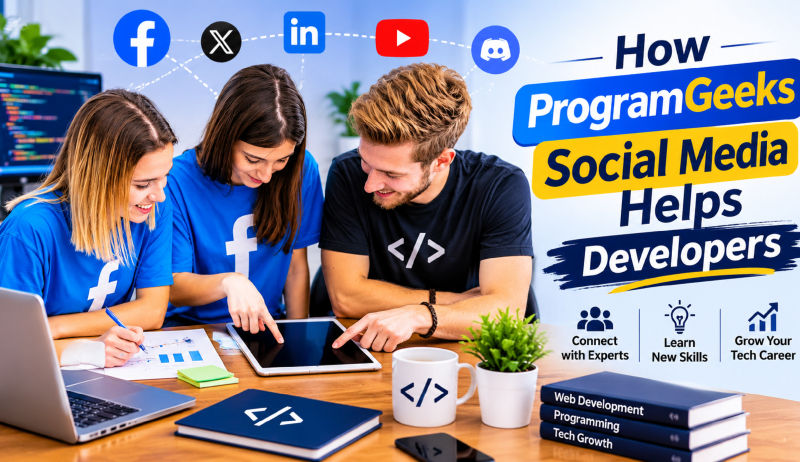
In 2026, strong coding skills alone are no longer enough.. Developers also need to be seen, to be trusted, to communicate well, to prove what they can build, and to have a solid circle of people to learn from. ProgramGeeks Social Media can help with all of that in a few practical ways.
1. It Keeps Developers Up to Date
The tech world never slows down. New languages, tools, hosting options, AI coding assistants, frameworks, social platforms, and software trends show up all the time. A space built around technology lets developers keep track of what matters without relying on scattered, random feeds.
ProgramGeeks already publishes content on hosting, social media news, crypto, software, and games. That variety suits readers who want a wide understanding of the digital world.
2. It Supports Developer Networking
Networking isn’t only for business owners and marketers. Developers need strong professional connections too. The right network can lead to job referrals, freelance work, open-source teamwork, mentorship, feedback on projects, and help with technical problems.
A social space made for developers makes it easier to meet people who actually understand coding challenges, frameworks, deployment trouble, debugging headaches, AI tools, and career growth.
3. It Helps Beginners Learn Faster
Beginners often get stuck because they don’t know what to study next. They hop from HTML to Python to React to AI tools without a clear direction. A community-style platform lets them ask questions, read discussions, follow tutorials, and see how real developers work.
For new coders, ProgramGeeks Social Media could be valuable if it offers simple explanations, quick coding tips, beginner guides, and practical examples.
4. It Gives Developers a Place to Share Projects
A portfolio becomes stronger when it contains real work, and social media lets developers show that work openly.
Developers can share things like:
A small app they created
A website they redesigned
A GitHub repository
A bug they managed to fix
A tool they built
A solution to a coding challenge
A case study from a project
A before-and-after performance improvement
Content like this builds trust because it shows evidence of skill.
5. It Supports Personal Branding
In 2026, many developers build their personal brand through LinkedIn, GitHub, Dev.to, Has node, X, YouTube, Reddit, Discord, and niche communities. ProgramGeeks Social Media fits this trend by linking coding knowledge with online visibility.
A strong personal brand can lead to:
Better visibility for jobs
Freelance leads
Collaboration requests
A growing newsletter
More portfolio traffic
Recognition in open source
Speaking opportunities
Connections in the startup world
How Beginners Can Use It
Beginners can use ProgramGeeks Social Media to learn in public and keep track of their progress. Many new developers wait until they feel “expert enough” before posting anything. That wait isn’t needed.
Beginners can share:
Daily coding progress
Notes from tutorials
Small projects in HTML, CSS, JavaScript, or Python
Questions about programming concepts
Mistakes and the lessons from them
Updates to their GitHub repositories
Lists of tools for beginners
Learning roadmaps
Short explanations of simple topics
For example, a beginner might write: “Today I figured out how CSS Flexbox works. My biggest mix-up was between justify-content and align-items. Here’s the small layout I made.”
A post like this is simple, honest, and useful. It shows progress and could help another beginner who is facing the same problem.
How Students Can Build Confidence Online
Students can use ProgramGeeks Social Media to gain confidence before applying for internships, jobs, or freelance work. A student with public learning posts, project screenshots, GitHub links, and clear explanations can come across as more serious than one who only has a basic resume.
Students can use it to:
Share projects from college
Talk about how they’re preparing for internships
Put together a mini portfolio
Ask questions about careers
Join coding conversations
Learn from experienced developers
Post notes from online courses
Document hackathon projects
A student doesn’t have to post anything perfect. What matters is showing consistency, curiosity, and steady improvement.
How Freelancers Can Build Trust and Leads
Freelancers can use ProgramGeeks Social Media to earn trust and attract leads. Clients usually want proof that a freelancer understands real problems, not just the names of tools.
Freelancers can post:
Examples of website redesigns
WordPress troubleshooting tips
Lessons from Shopify development
Ideas for improving landing pages
Page speed optimization results
Lessons from client projects, with private details removed
Common website mistakes business owners make
Before-and-after case studies
For freelancers, the most useful content is practical. Rather than saying “I build websites,” a freelancer could say, “I cut a homepage’s load time by compressing images, removing unused plugins, and improving caching.” That shows real value.
How Software Engineers Can Share Deeper Technical Ideas
Software engineers can use ProgramGeeks Social Media to discuss more advanced topics, such as architecture, databases, code reviews, DevOps, testing, AI tools, and performance.
Good post ideas for engineers include:
How to organize a backend project
Lessons learned from reviewing pull requests
API security mistakes to avoid
Why database indexing is important
Ways to reduce technical debt
How to write better documentation
How to test edge cases
What makes clean code easier to maintain
This kind of content helps experienced developers build authority and connect with other serious professionals.
ProgramGeeks Social Media for Tech Bloggers
Tech bloggers can use this topic to write about software, coding, social media trends, AI, hosting, digital tools, and growing online communities. Because ProgramGeeks covers several areas of technology, bloggers can build a cluster of related articles around it.
Useful article ideas include:
A ProgramGeeks Social Media guide for beginners
ProgramGeeks Social Media features explained
ProgramGeeks Social Media vs LinkedIn
ProgramGeeks Social Media vs GitHub
How developers can grow online in 2026
Social media content ideas for programmers
A guide to developer personal branding
How to share coding projects online
Social media safety tips for developers
The best online communities for coders
A set of articles like this lets a website cover more search intent and build topical authority.
Best Content Ideas for ProgramGeeks Social Media
To grow through ProgramGeeks Social Media, you need content that helps other developers. The best posts usually solve a problem, explain an idea, or show real progress.
Good content ideas include:
“How I fixed a common JavaScript error”
“My first React project and what I learned”
“Best free tools for beginner developers”
“How I improved my website’s speed”
“A simple explanation of APIs for beginners”
“What I learned from using GitHub every day”
“My coding setup for productivity”
“How AI tools helped me debug faster”
“Mistakes I made while learning Python”
“Before and after: updating my portfolio website”
Stay away from copied content, vague tips that sound AI-written, made-up success stories, and untested code. Developers tend to trust posts that include real examples, clear steps, screenshots, code snippets, or honest lessons.
Final Thoughts
Today, a developer’s career is shaped by more than the code they write. It also depends on the people they know, the work they show, and how clearly they explain what they’ve learned. A community like ProgramGeeks Social Media, if it offers the kind of space it is described as offering, could help with all three. Visit softwarercsdassk for more information.